




Quick Answer
Exosomes vs PRP microneedling: which booster should you pick?
Head-to-head, the research shows PRP and exosomes give similar skin-quality results after microneedling. A split-face trial that put one booster on each side of the face found no statistically significant difference between them. So the choice comes down to logistics and candidacy, not one being clinically better: PRP uses your own blood, has a longer research record, and needs a quick draw; exosomes skip the draw, deliver the same lab-standardized dose every session, and tend to settle a little faster. Across a series, finishing the treatments matters more than which booster you pick.
Want the full picture on each one? See our pages on PRP microneedling and microneedling with exosomes.
Almost every microneedling consultation I run hits the same fork in the road: PRP or exosomes? Patients have usually read that one of them is far stronger than the other, and they want me to confirm which. The honest answer is less dramatic than the marketing, and I think it actually makes the decision easier. Here is how I walk through it with patients at our studio in Encinitas.
What PRP and Exosomes Actually Are
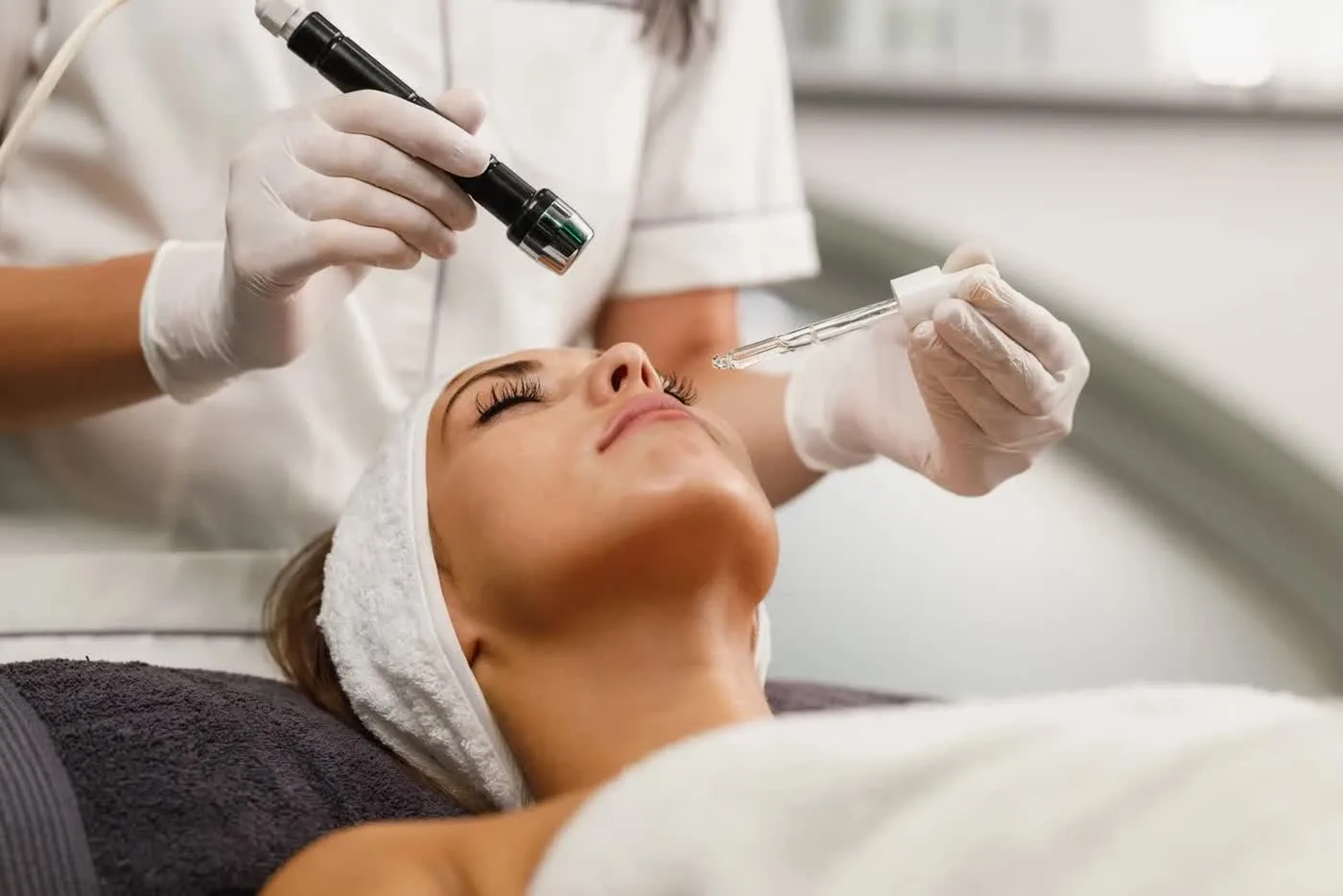
Both are add-ons. Neither replaces the microneedling itself, which is the part that does the structural work. The fine needles create controlled micro-channels in the skin, and the skin responds by building new collagen and elastin. The booster you layer on afterward changes how the skin recovers and what extra signaling it gets while those channels are briefly open.
PRP (platelet-rich plasma) starts with a small blood draw. We spin your blood in a centrifuge to concentrate the platelets, which release growth factors like PDGF, VEGF, and TGF-beta. Those are the same proteins your body already uses to repair tissue. After the needling, we apply that plasma to the treated skin. It is your own biology, at whatever dose your body happens to produce that day.
Exosomes come from a lab. They are purified, freeze-dried signaling particles (we use BENEV) that carry growth factors, peptides, and messenger RNA. No blood draw is needed. We reconstitute the vial right before the treatment and apply it the same way we apply PRP.
One thing I say up front, because the marketing around exosomes runs hot: there is no FDA-approved exosome product for skin or aesthetics. The FDA has published a consumer alert about unapproved stem-cell and exosome products sold with broad regenerative promises. What goes on your face after microneedling is a topical cosmetic, not an injected drug. That is true for both boosters.
What the Head-to-Head Research Shows
This is the part most comparison articles skip, usually because the answer doesn't sell a premium upgrade.
A split-face trial tested the two directly. Patients had PRP applied to one side of the face and exosomes to the other, both over three radiofrequency microneedling sessions spaced about four weeks apart. The investigators were blinded to which side got which. Their finding: both sides improved on wrinkling, tone, texture, and overall appearance, with measurable increases in collagen on both halves, and no statistically significant difference between the two boosters. Side effects, the usual transient redness and mild swelling, settled in under a week on both sides.
It is a small study, fifteen patients at a single clinic, so I hold it loosely rather than treating it as the last word. But it is real head-to-head data, and it lines up with what I see in the treatment room. When someone tells me exosomes are "a hundred times stronger than PRP," that is a marketing number, not a clinical outcome. The skin-quality results land in a similar place.
PRP also carries something exosomes can't claim yet: a long research record. It has been used and studied in dermatology for years. The exosome data is promising but early, mostly small studies rather than decades of large trials. If a deep evidence base matters to you, that is a point in PRP's column.
Where They Differ, and Where They Don't
Where they don't differ much: the final skin-quality result across a full series. The research and my own chair both point that way.
Where they actually differ is practical, and that is where the decision lives.
PRP vs Exosomes: The Real Differences
PRP
- •Made from your own blood, drawn and spun on the day
- •Potency varies with your age, health, and medications
- •Pinkness often lingers a little longer afterward
- •Long track record in published dermatology research
- •Usually the more budget-friendly add-on
Exosomes
- Lab-purified product, no blood draw needed
- Same standardized dose every session
- Anti-inflammatory signaling tends to settle the skin faster
- Promising but still early evidence base
- The premium option, for convenience and consistency
Notice that none of those differences is "works dramatically better." They are about how the booster is sourced, how predictable it is, and how your recovery looks, not about a different tier of result.
How to Decide Which One Fits
Because the outcomes land close, I steer the decision by fit rather than by "which is best." A few honest tiebreakers:
- You would rather skip the needle. Exosomes mean no blood draw. For genuinely needle-averse patients, that alone can settle it.
- You want your own biology and the longest track record. PRP uses nothing but your own platelets and has the deeper research history behind it.
- You are older or take medications that affect your platelets. PRP potency drifts with age and health. Exosomes deliver the same dose regardless, so they appeal when predictability matters.
- You have an event coming up. Exosomes usually calm the post-needling flush faster, which buys you a little breathing room before a wedding or a photo day.
- You already do PRP for hair or joints and like the consistency. Staying with what you know is a perfectly good reason.
One clarification, because the search results blur it: PRP and exosomes for hair loss are a separate treatment with a different protocol. This post is about facial skin after microneedling, not the scalp.
What We See Across a Microneedling Series
Our own appointment book tells a story that matters more than the booster debate. Across the last year, our Encinitas team has performed more than 100 microneedling treatments. About one in three of those patients came back for a second session, with a typical gap of around seven weeks between visits. Most of them pair microneedling with injectables like Botox or Dysport rather than treating it as a standalone fix.
Here is the pattern I take from that: the people who see real change in texture and tone are the ones who finish the series, not the ones who agonized over PRP versus exosomes. One session gives you a glow. The actual remodeling builds over a few treatments, because collagen is slow. So when a patient is genuinely torn between the two boosters, I tell them the honest truth, which is that committing to the full series and protecting the result with sunscreen will move their skin further than the booster they pick on day one.
When Neither Booster Is the Right Call
Microneedling with a booster is the wrong plan more often than people expect. If any of these apply to you, raise it before anything gets scheduled.
- Active acne or open lesions. Running a needling device across inflamed, broken skin can spread bacteria and worsen pigmentation. Calm the breakout first, then treat the scars it leaves behind.
- An active cold sore in the treatment area. Needling through an outbreak spreads it. Antivirals and healing time come first.
- Blood thinners or a bleeding disorder. This one is PRP-specific. Warfarin, high-dose aspirin, and similar medications change both the blood draw and what the centrifuge yields, and they raise bruising risk. Bring your full medication list so we can talk it through.
- Keloid-prone skin. Any micro-injury treatment carries a higher risk of raised scarring for keloid-prone patients, so a cautious, patch-tested approach is the right call.
- A timeline that doesn't match the biology. If you need dramatic scar improvement in three weeks, neither booster will get you there. Collagen remodeling runs over months.
- Pregnancy or breastfeeding. Most clinicians, including us, pause elective cosmetic microneedling until after.
If none of those fit, one of the two booster paths above is almost certainly a reasonable choice. A good injector will tell you when a different treatment would serve you better, and will not push the premium add-on just because it costs more.
Questions I Hear Most
The questions that come up most often in our microneedling consults.
If you are weighing microneedling and want help deciding whether PRP, exosomes, or a plain serum makes the most sense for your skin, that is a short conversation our team in Encinitas is happy to have. We will look at your skin, your history, and your goals, and tell you honestly which path fits, or whether a different treatment would serve you better. You can also read more about our exosome microneedling approach.
This article is for educational purposes and reflects our clinical experience at Call of Beauty Med Spa in Encinitas, CA. It is not individual medical advice, individual results vary, and you should consult a licensed provider about your own skin and health history before treatment.

Deciding between PRP and exosomes?
Book a consultation and our RN team will help you pick the booster that fits your skin, your schedule, and your goals, with no pressure toward the pricier option.
Keep reading
More honest, RN-written guides on microneedling and protecting your results.
Microneedling With Exosomes: How It Works and Who It Helps
A clear, honest explanation of microneedling with exosomes from an Encinitas med spa team — what exosomes are, how the treatment works, how it compares to PRP, and who it helps.
Read article6 min read
How to Protect Your Skin This Summer
A simple, dermatology-backed routine to protect your skin this summer: the right SPF, how to apply it, and the shade and clothing habits that matter most.
Read article6 min read
Sources
- U.S. Food & Drug Administration. Consumer Alert on Regenerative Medicine Products Including Stem Cells and Exosomes.
- Adipose Mesenchymal Stem Cell-Derived Exosomes Versus Platelet-Rich Plasma for Photoaged Facial Skin: An Investigator-Blinded, Split-Face, Non-Inferiority Trial (PMC).
- Platelet-Rich Plasma in Dermatology, Journal of Cutaneous and Aesthetic Surgery (PMC).
- American Academy of Dermatology. Microneedling.