



Quick Answer
Sculptra vs Radiesse vs filler: what's the real difference?
Hyaluronic acid filler adds volume the day it's injected and can be dissolved with an enzyme. Sculptra (poly-L-lactic acid) adds nothing you keep on day one; it prompts your own collagen to build over two to four months and can't be reversed. Radiesse (calcium hydroxylapatite) sits between them: immediate lift from its gel plus collagen stimulation afterward, and it can't be dissolved either. Filler suits precise features and anyone who wants an exit. Biostimulators suit diffuse volume loss and skin quality in patients who can wait and don't need one.
"Found out recently that Sculptra can't be dissolved and my injector never told me this."
That's the title of a Reddit thread I think about more than I'd like to. The woman who wrote it had chosen Sculptra over filler because it sounded less risky. A year later she learned it was the one she couldn't undo. Nothing had gone wrong with her face. Something had gone wrong with her consult.
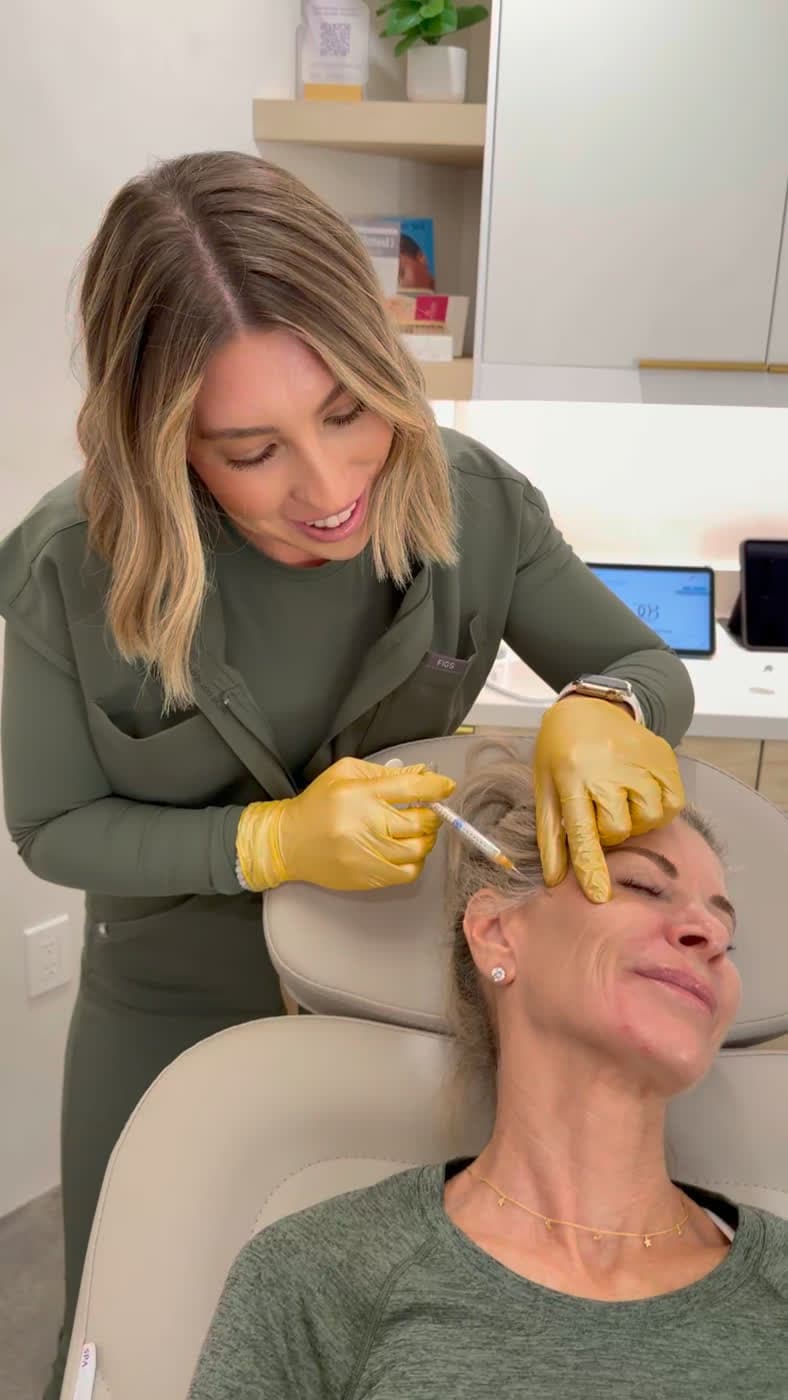
I'm Olga Brener, the RN injector at Call of Beauty in Encinitas, and biostimulators are a large part of my week: more than 200 Sculptra and Radiesse appointments across more than 100 patients in the 18 months ending August 2026. The "Sculptra vs Radiesse vs filler" question now comes up in nearly every consult, and the honest answer takes longer than a comparison chart. So here's the version I give in the chair, including the parts that cost me bookings.
Is Sculptra a Filler?
On paper, yes. The FDA's overview of soft tissue fillers lists poly-L-lactic acid and calcium hydroxylapatite in the same category as hyaluronic acid. In practice, no. And the difference is the whole decision.
A hyaluronic acid filler (Juvederm, Restylane, RHA) is a gel that takes up space. Where I put it is where the volume is, the moment I put it there. It's precise, it's predictable, and it breaks down over roughly 6 to 18 months depending on the product and how much the area moves.
Sculptra is poly-L-lactic acid: microparticles suspended in sterile water. The water is gone within days. What stays behind is a scaffold that irritates the tissue just enough for fibroblasts to lay down new collagen around it. In a biopsy study of treated patients, type I collagen rose measurably at three and six months after injection, with little or no inflammation. That new collagen is the result. It isn't a product sitting in your face. It's your face, thicker.
Radiesse is the hybrid. Calcium hydroxylapatite microspheres ride in a gel carrier: the gel lifts immediately, and as it absorbs over months the microspheres prompt collagen the same way Sculptra's particles do. Thin it with saline (you'll see this called "hyperdilute") and the lift disappears; what's left is a pure skin-thickening treatment, which is how a consensus panel recommends using it on the neck, chest, and body.
So when a patient asks "biostimulator or filler," the real question is this: do you want volume you can see today and remove tomorrow, or a slower structural change that becomes yours?
What "Can't Be Dissolved" Really Means
Back to that Reddit thread, because the fear in it deserves a precise answer rather than reassurance.
HA filler is reversible because an enzyme, hyaluronidase, breaks hyaluronic acid down within hours. We use it in our filler dissolve appointments for migration, overfill, and old product that's in the way of a better plan. It's the closest thing aesthetics has to an undo button.
There is no enzyme for collagen you grew yourself. Nothing dissolves a Sculptra result, and hyaluronidase does nothing to Radiesse either. What can be managed are the problems: a nodule can be massaged, injected with saline or a dilute steroid, and in rare persistent cases removed. But the result itself, good or bad, fades only on your body's schedule, over two years or more.
That isn't a reason to avoid biostimulators. Most of my biostimulator patients are glad they did it, and the gradual build makes true overcorrection uncommon. It is a reason to treat the decision differently from filler, which is why I say three things out loud in every biostimulator consult, unprompted:
- This can't be undone. If that changes your answer, filler first.
- The result is diffuse, not crisp. If you want a defined cheekbone or a specific lip shape, this is the wrong tool.
- You're committing to a series and to the massage homework. Half a protocol is a full price for half a result.
If an injector hasn't said all three before your first vial, ask why.
Which One Goes Where
Most of the Reddit arguments about which is "better" fall apart once you ask: better for which zone? Every area of the face has its own answer.
Temples
Sculptra, almost always. The temple is thin, close to bone, and unforgiving with HA filler, which can look lumpy or shift. Patients often can't find an injector willing to put HA filler here, and the reason is that most of us prefer the biostimulator: diffuse, gradual fill in a region that wants exactly that.
Cheeks and midface
Depends on the complaint. Flat, deflated cheeks across a wide area: Sculptra. One cheekbone you want defined: HA filler, because I can place it precisely and adjust it. Radiesse in the cheek is the middle option, firmer and more structural; I use it when I want immediate support that will also thicken the skin over it.
Jawline and pre-jowl
Radiesse. Its gel is firmer than most HA products, holds a line, and the collagen it prompts keeps that definition after the gel absorbs; the jawline is one of its FDA-approved areas. Sculptra along the jaw is possible but blurrier, and it's where the 'my face got wider' threads tend to come from.
Neck, chest, hands
Hyperdilute Radiesse. HA filler has almost no role in crepey neck skin, and while some injectors use Sculptra there, it isn't my first choice. Diluted calcium hydroxylapatite spread thinly under the skin thickens it over months, and it's one of the few non-surgical tools that hold up in these areas.
Lips and around the mouth
HA filler only. Both biostimulators carry a higher nodule risk in mobile tissue, and neither is approved for the lips. Anyone offering Sculptra in the lip should be a hard no.
Under-eyes
Neither biostimulator. The tissue is too thin, the under-eye isn't an approved area for either product, and it's a known site for visible nodules. A conservative HA product placed correctly, or treating the cheek beneath it, is the honest route.
Nasolabial folds, since that question arrives weekly: the fold itself responds to HA filler placed directly, but a deep fold is usually a cheek-support problem, and cheek support is where Sculptra earns its keep. Treating the fold alone with filler works for a year. Rebuilding the cheek above it changes why the fold is there. I walked through that exact planning logic in our facial balancing guide.
Why Week Five Looks Like Nothing Happened
"It's week 5 and my temples look exactly how they did before. Shouldn't I see SOME improvement by now?" That's a Reddit post. It's also a text I've received more than once.
Here's the Sculptra calendar. You leave the first session looking fuller. That's the water, and it absorbs over about a week, often taking every trace of the fullness with it. Weeks two through five are the quiet stretch: the particles are in place, the fibroblasts haven't done much yet, and the mirror reports nothing. Somewhere in weeks six to eight the skin starts to feel firmer before it looks fuller. Real, visible volume arrives two to four months after your last session, not your first.
Our booking data reflects that rhythm. Across our Sculptra patients since early 2025, the median gap between one session and the next is about six and a half weeks, which is right where I want it: late enough to see the first response, early enough to keep the build going.
Radiesse is easier on the nerves because the lift is there on day one. The collagen phase behind it runs on a similar three-to-six-month clock, so the result you see at month four is usually a little better than the one you saw on day one.
HA filler settles in about two weeks. That's it.
The patient who does best with a biostimulator books the series, stops studying the mirror for eight weeks, and then compares photos. I'll say that in the consult, and I'll say it again at the door.
What Year Two Looks Like
One of the most-read Sculptra threads on Reddit asks a question the brochures skip: "Is the 2-year mark when it starts to go away, or when it's fully gone?" The follow-up nobody answered well: what does it look like at three years if you never touch it up?
Data first. In the FDA's extension study for the cheek indication, between 93 and 97 percent of treated subjects still met the response threshold from month 19 through month 24. The study stopped at two years, which is why "up to two years" is the phrase everyone uses. It doesn't mean the collagen switches off at month 24. It means nobody kept counting.
The version from the chair: the collagen you build is yours and doesn't get dissolved by time, but you keep losing collagen at your normal rate, so the gap between you and where you'd otherwise be narrows slowly. Most of my patients who complete a series hold a result they can see for two years or more, then return for a single maintenance vial rather than restarting. Some stretch it to three years. And a few never see much at all. Biostimulators depend on your biology responding; heavy smokers, patients with low collagen reserve, and some people for reasons we can't identify are weak responders. I'd rather tell you that group exists than pretend every face builds the same.
Radiesse holds a shorter line, usually 12 to 18 months, with the diluted neck version closer to a year. HA filler is the shortest-lived and the most predictable, which is the trade.
Lumps, Nodules, and the Chipmunk-Cheek Fear
The two outcomes Reddit fears most are bumps you can feel and a face that got round. Both are real. Both are mostly preventable, and the numbers are better than the threads suggest.
In a 2024 multicenter study of Sculptra prepared with modern high-volume dilution, nodules occurred in under 4 percent of patients; older trials that used thicker mixes reported rates roughly twice that, and most of those bumps were small and resolved on their own. True inflammatory granulomas are reported at a fraction of one percent. Nearly every nodule traces back to one of four choices: product mixed too thick or too soon, injection too shallow, too much in a mobile area, or skipped massage. That's why we dilute generously and mix ahead of time, inject deep, avoid the lips and under-eyes entirely, and demonstrate the 5-5-5 massage (five minutes, five times a day, for five days) before you leave.
The round face is a different failure. It comes from too much product spread across the whole face too fast, especially the lower face, which is why an overfilled Sculptra result reads as puffy rather than sharp. The prevention is boring: fewer vials per session, honest spacing, and reassessing after session one before committing to a total. If a clinic quotes you a vial count before anyone has looked at your face, that number is a guess.
Sculptra or Radiesse? How I Choose
When both are on the table, my default tilts toward Sculptra. Across our Encinitas studio's biostimulator appointments in the 18 months ending August 2026, we placed Sculptra roughly twice as often as Radiesse, and the reasons are consistent:
- The complaint is diffuse. "My whole face looks deflated" is a Sculptra sentence.
- The patient can wait and has no event on the calendar.
- The zone is the temple or the broad midface.
I reach for Radiesse when:
- I want a line, not a field: jawline, pre-jowl, chin support.
- Skin quality is the goal and the area is the neck, chest, or hands, where hyperdilute calcium hydroxylapatite is the better-studied tool.
- The patient needs something visible on the day, with collagen as the bonus rather than the point.
And I combine them more than people expect: Radiesse along the jaw, Sculptra through the cheeks and temples, in separate sessions. What I won't do is layer two different products into the same spot on the same day, because if something goes wrong I want to know which one did it.
Why Most Plans End Up Using Both
Biostimulator versus filler is a real decision for a single zone. For a whole face, it's a false choice.
Our appointment book says the same thing: after neurotoxin, HA filler is the treatment our Sculptra patients most often also book. That isn't upselling. A face with rebuilt collagen support usually needs less filler to finish a feature, and the order matters: foundation first, detail second. Sculptra or Radiesse over a few months, then a small amount of filler where a precise shape is wanted, typically the chin, the lips, or one cheekbone. Doing it backwards, filler into a deflating foundation, is how people end up chasing volume with more syringes every year.
If you already have filler in place, that's fine. I plan around it, and sometimes the plan starts with dissolving what's there. If you've had Sculptra in the past, tell me exactly where and when, because I'll be placing filler next to tissue that's thicker than it used to be.
The Patients I Send Home With a Different Plan
Some of the most useful consults end without a biostimulator. These are the ones:
The event in under ten weeks. A wedding, a reunion, a big photo. A biostimulator can't deliver on that calendar; the fullness on day one is water. Filler or a neurotoxin serves a short deadline. Sculptra serves next year.
The first-timer who wants an exit. If you've never had an injectable and part of you wants the option to undo it, start with HA filler. You'll learn how your face takes volume and you'll keep the off-ramp. Biostimulators make a better second injectable than a first one.
The specific-feature request. "Sharper cheekbones," "a defined lip border," "a stronger chin." Precise shapes want filler. Biostimulators give diffuse improvement, and a patient who wants crisp will be disappointed by diffuse no matter how well it's placed.
The under-eye and the lips. No biostimulator, from me or anyone. See above.
The late-20s face with no volume loss. The top reply on a Reddit thread from a 31-year-old considering Sculptra was one word: "Don't." I don't always agree with Reddit. I did there. Prejuvenation has a place, and a single vial in the late 30s to bank collagen can be reasonable. Treating a face that hasn't lost anything is spending money to change nothing.
Active autoimmune or inflammatory disease. Lupus, sarcoidosis, uncontrolled rheumatoid disease. These aren't automatic noes, but they need your rheumatologist's input before anyone opens a vial, because granulomatous reactions are more likely in tissue that's already inflamed. Active infection, cold sores near the site, pregnancy, and breastfeeding all mean wait.
The stretched budget. A biostimulator series is a commitment. One vial, once, in a face that needs four is the most expensive way to see nothing.
Sculptra, Radiesse, and Filler Questions From the Chair
The questions that come up in nearly every biostimulator consult, answered the way I answer them in person.
If you're weighing Sculptra, Radiesse, or filler anywhere in North County, or driving up from San Diego, the useful next step is a consult where someone looks at your temples, cheeks, and jaw and tells you which zones want which tool, or whether the honest answer is none of them yet. Book a biostimulator consultation at our Encinitas studio. San Diego patients can start with our Sculptra planning guide for the practical side of the trip.
This article is for educational purposes and reflects our clinical approach at Call of Beauty Med Spa in Encinitas, CA. It is not individual medical advice, individual results vary, and you should consult a licensed provider about your own health history before treatment. Practice statistics are aggregate, anonymized figures from our appointment records for the 18 months ending August 2026.
Keep reading
More RN-written guides on collagen, structure, and honest treatment planning.
How Non-Surgical Skin Tightening Works (and When It Doesn't)
An RN injector explains how non-surgical skin tightening works: RF microneedling vs biostimulators, loose skin after GLP-1 weight loss, and who should skip it.
Read article8 min read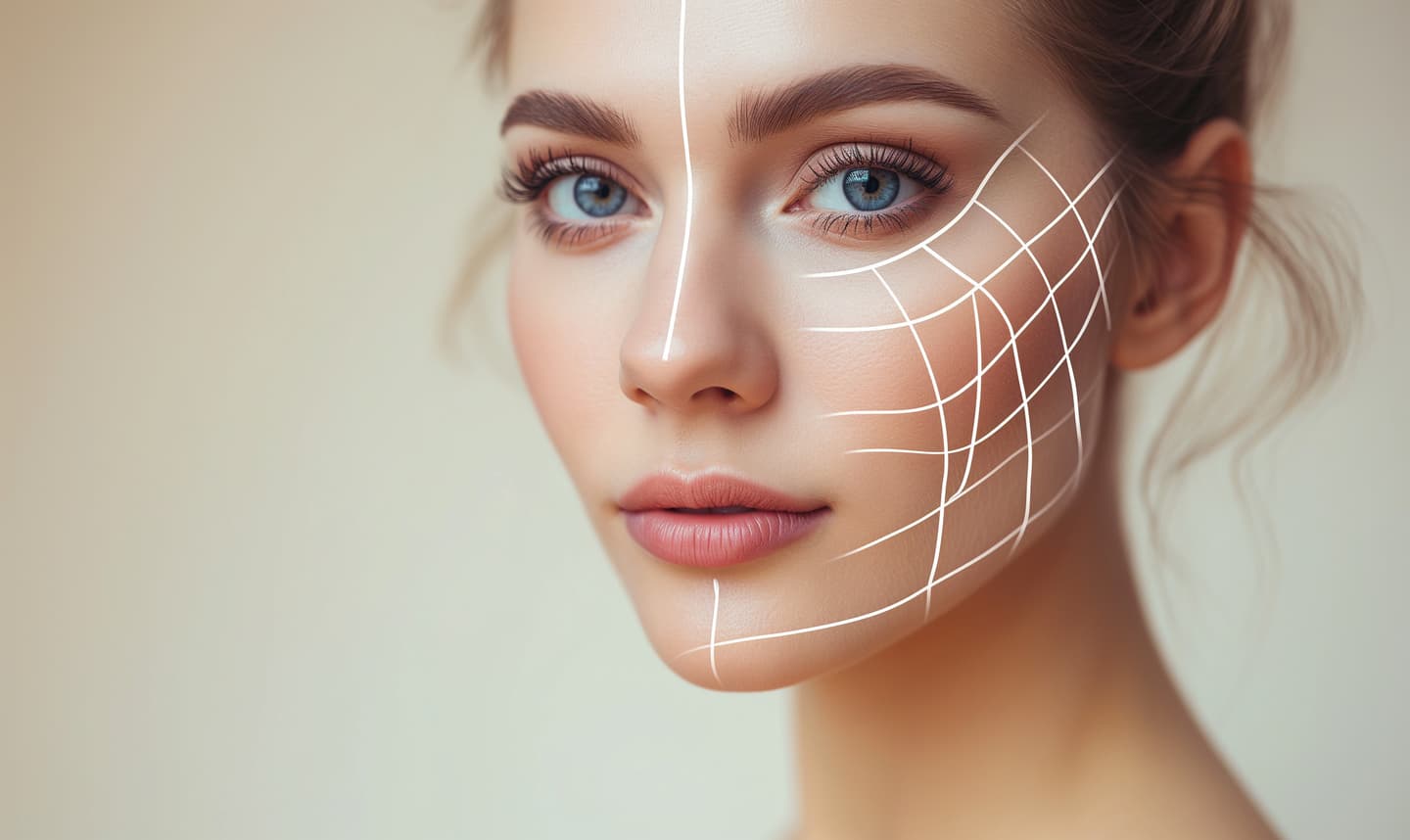
How Injectors Actually Plan Facial Balancing
An RN injector's guide to facial balancing: how a face gets read before a syringe opens, what balancing can and can't fix, why our data shows 1 in 12 filler appointments is a dissolve, and who should skip it.
Read article10 min read
Sculptra face, Radiesse jaw, or filler first?
A biostimulator consultation at our Encinitas studio takes about 30 minutes. Olga maps which zones would respond to which product, tells you what can't be undone, and says so if the right answer is to wait.