




Quick Answer
What's the best way to protect your skin in summer?
To protect your skin this summer, layer a few habits that work together: a broad-spectrum sunscreen of SPF 30 or higher, reapplied every two hours; shade during peak sun, from 10 a.m. to 4 p.m.; and physical cover like a wide-brim hat, UPF clothing, and UV sunglasses. Sunscreen alone isn't enough. How consistently you apply it matters more than the number on the bottle.
Already noticing sun damage? Our skin rejuvenation treatments in Encinitas can help even out tone and texture.
Living near the coast means sun exposure is part of daily life, not just a beach-day problem. The best way to protect your skin this summer isn't a single miracle product, it's a short routine you'll stick with. At Call of Beauty in Encinitas, we see the cost of skipped sunscreen every week: uneven tone, brown spots, and fine lines that show up a decade early.
Summer skin damage is largely preventable. And the steps are simpler than the skincare aisle makes them look. Here's what the dermatology research says, and where most people slip up.
How Summer Sun Damages Skin
Most summer skin damage comes from ultraviolet radiation, and it arrives in two forms. UVB rays are the shorter wavelengths behind sunburn. UVA rays are longer, reach deeper into the skin, and drive the tanning, brown spots, and collagen breakdown that age skin early. Both raise the risk of skin cancer. Research attributes up to 90% of visible skin aging to the sun, which is why a few unprotected summers tend to surface as rough texture and dark spots long before deep wrinkles do.
This is where SPF helps, though the numbers are less dramatic than the bottles suggest.
What SPF Blocks
No sunscreen blocks 100%, and the jump from SPF 30 to SPF 50 is small. That's why the Skin Cancer Foundation puts more weight on how you apply sunscreen than on chasing the highest number on the shelf.
How to Choose a Sunscreen for Summer
The label tells you most of what you need to know. Look for three things: broad-spectrum (it screens both UVA and UVB), an SPF of 30 or higher for daily wear and 50 or higher for a full day outside, and water resistance. Under FDA rules, a product can only be labeled "water resistant" for 40 or 80 minutes, and the words "waterproof" and "sunblock" are no longer allowed, because nothing fully blocks UV or lasts forever.
The mineral-versus-chemical debate is mostly about feel and skin sensitivity, not how well each one works.
Mineral (Zinc / Titanium)
- •Sits on top of skin and reflects UV
- •Protects the moment it's applied
- •Gentler for sensitive or breakout-prone skin
Chemical (Avobenzone, etc.)
- Absorbs into skin and converts UV to heat
- Needs about 15 minutes to activate
- Lighter feel, less likely to leave a white cast
For acne-prone or reactive skin, a mineral formula is usually the easier daily choice. For sport and water, a water-resistant chemical or hybrid often wins on wearability.
How to Apply Sunscreen the Right Way
How you apply sunscreen matters more than the SPF on the bottle, because most people use about a quarter of what they need. The American Academy of Dermatology recommends roughly one ounce, about a shot glass, to cover the body, and a teaspoon (two finger-lengths) for the face and neck.
The order and timing matter too:
- Apply about 15 minutes before you head outside, so the skin absorbs it.
- Use a shot glass for the body and a teaspoon for the face and neck.
- Don't skip the ears, hairline, tops of the feet, and the backs of your hands.
- Reapply every two hours, and right after swimming or heavy sweating.
- Keep going on overcast days, since up to 80% of UV passes through clouds.
That last point matters here. Our June marine layer hides the sun, not the UV.
Sun Protection Beyond Sunscreen
Sunscreen is one layer, not the whole plan. The strongest protection comes from stacking habits, especially during the hours when UV peaks.
- Seek shade between 10 a.m. and 4 p.m., when the sun is most intense.
- Wear UPF-rated clothing. A UPF 50 shirt blocks roughly 98% of UV.
- Add a wide-brim hat (a 3-inch brim or wider) to shield your face, ears, and neck.
- Choose UV-blocking sunglasses to protect your eyes and the thin skin around them.
- Reapply after the beach, the pool, or a sweaty hike, whatever you're wearing.
None of this means hiding indoors all summer. It means being deliberate during peak hours and casual the rest of the day.
How Summer Sun Affects Your Skin Treatments
If you invest in skin treatments, sun protection is what protects that investment. UV exposure is the fastest way to undo results from microneedling, peels, or laser, and it can trigger the same pigmentation those treatments work to fade. Freshly resurfaced skin and new collagen stay more vulnerable to the sun for weeks afterward.
That's why every patient leaves with the same instruction: daily SPF 30 or higher while the skin heals.
The simplest anti-aging step isn't a treatment at all. It's the sunscreen you put on the morning after one.
If sun damage has already set in, with brown spots, dullness, or rough texture, it's treatable. Our microneedling with exosomes sessions ($550 each) support tone and texture, and LaseMD laser resurfacing targets pigment and sun-related changes more directly. For a closer look at how the collagen process works, read our guide to microneedling with exosomes. And before treating any brown spot, confirm what it is: our guide on how to get rid of sun spots covers how to tell them apart from melasma.
Common Questions
Summer Sun Protection FAQs
Do I still need sunscreen on cloudy or foggy coastal days?
Is a higher SPF always better?
Should I use mineral or chemical sunscreen on my face?
Can I reapply sunscreen over makeup?
How much sun protection do young kids need?
Keep reading
How to Get Rid of Sun Spots (and When They Aren't Sun Spots)
How to get rid of sun spots, from an RN injector: how to tell a sun spot from melasma, what creams can and can't fade, how IPL clears pigment, and why fall is the season to start.
Read article9 min read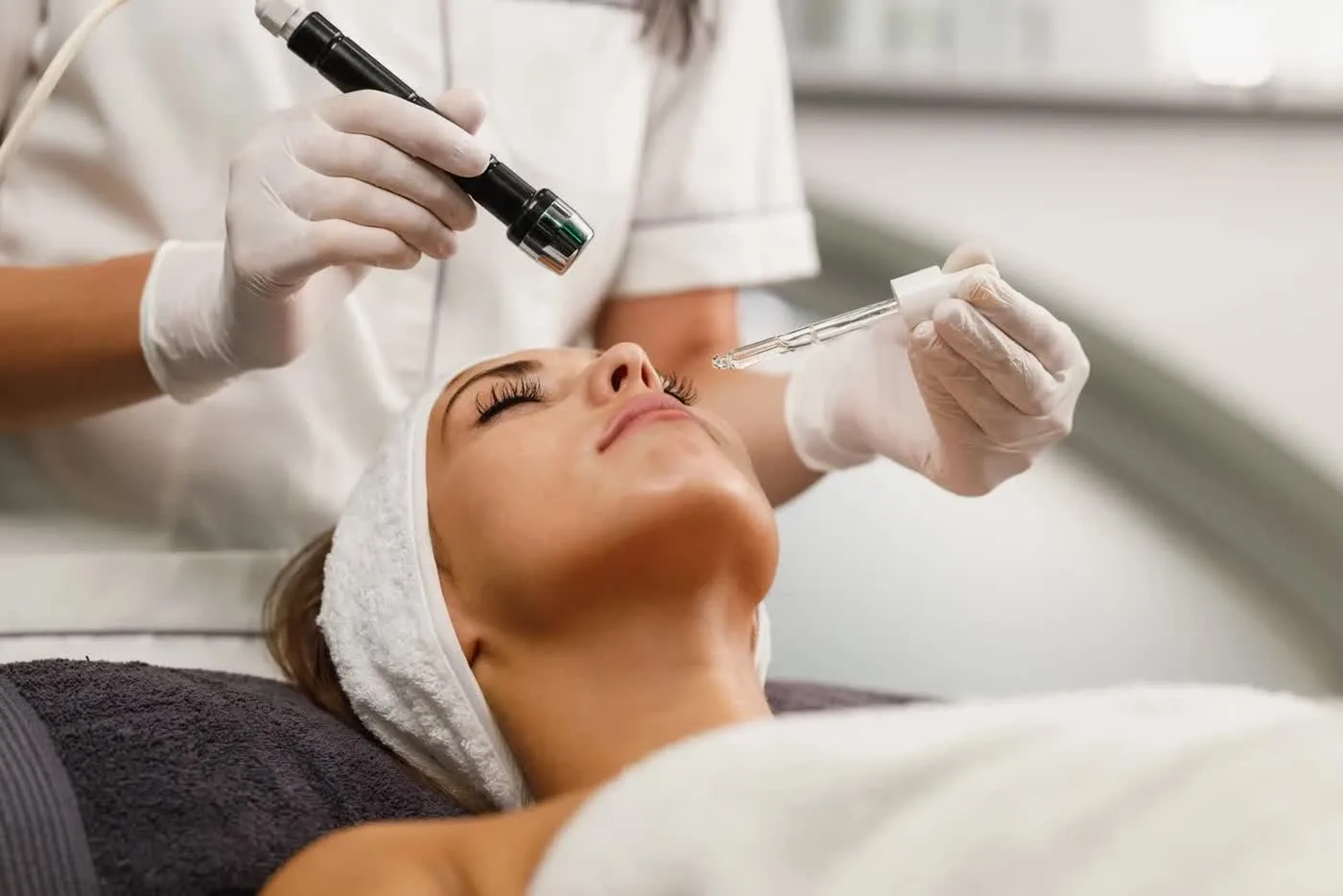
Microneedling With Exosomes: How It Works and Who It Helps
A clear, honest explanation of microneedling with exosomes from an Encinitas med spa team — what exosomes are, how the treatment works, how it compares to PRP, and who it helps.
Read article6 min read

Your Summer Skin Checklist
- Up to 90% of visible skin aging is linked to sun exposure, so daily protection is the most effective anti-aging habit there is.
- Choose a broad-spectrum sunscreen of SPF 30 or higher for daily wear, and SPF 50 or higher for a full day outdoors.
- SPF 30 blocks about 97% of UVB and SPF 50 about 98%, so application matters more than chasing a higher number.
- Use a shot glass of sunscreen for the body and a teaspoon for the face, applied 15 minutes before sun and reapplied every two hours.
- Up to 80% of UV passes through clouds, so coastal overcast days still call for sunscreen.
- Sun protection guards the results of treatments like microneedling and laser, which leave skin more UV-sensitive for weeks.
If summer sun has already left its mark and you'd like a professional opinion, you're welcome to visit us in Encinitas — the page has our hours, parking, and directions.
Summer sun caught up with your skin?
Book a consultation in Encinitas and our RN team will help you protect your skin this summer and treat any sun damage that's already showing.
This article is for educational purposes and reflects general dermatology guidance and our clinical experience at Call of Beauty Med Spa in Encinitas, CA. It isn't individual medical advice. Talk with a licensed provider about your own skin, health history, and any sun-related concerns.
References
- American Academy of Dermatology. How to Apply Sunscreen.
- Skin Cancer Foundation. Sun Protection.
- U.S. Food & Drug Administration. Sunscreen: How to Help Protect Your Skin from the Sun.