




Quick Answer
BioRePeel vs a traditional chemical peel: what's the real difference?
BioRePeel is a chemical peel: a biphasic 35% TCA formula that renews skin without the visible peeling phase. It suits maintenance, glow, congestion, and event prep, with no social downtime. A traditional corrective peel like the ZO 3-Step goes deeper, produces 3 to 5 days of real peeling, and does more for melasma, accumulated sun damage, and post-acne pigmentation. Pick by your skin concern, your downtime tolerance, and your skin tone, not by which one is trending. Many patients rotate both: light peels for upkeep, an occasional corrective peel for the heavier work.
Want the specifics on each treatment? See our pages on BioRePeel and the ZO 3-Step Peel.
BioRePeel is the peel patients ask me about after seeing it on TikTok. The ZO 3-Step is the peel I end up booking more often once we look at their skin together. That gap between what's trending and what a face needs is where most peel decisions go sideways, so this guide walks through the BioRePeel vs chemical peel comparison the way I do in a consult at our Encinitas studio: what each peel does, what the week after looks like, and who shouldn't be getting either one.
Is BioRePeel Even a Chemical Peel?
Yes. This question comes up constantly, and the confusion is understandable, because BioRePeel breaks the one rule everyone knows about peels: it doesn't make you peel.
The formula contains trichloroacetic acid (TCA) at 35%, plus salicylic acid, amino acids, and vitamins. TCA is the same workhorse acid used in traditional medium-depth peels. The difference is the delivery. BioRePeel is biphasic, meaning the solution has two phases that work at once: an oil-soluble phase that moves into pores and dissolves the sebum plugs that feed breakouts, and a water-soluble phase that exfoliates surface cells and carries the vitamins in.
That structure lets the acids do their renewal work without stripping the skin's protective barrier the way a classic TCA application does. No stripped barrier, no dramatic peeling phase. The number on the label sounds aggressive, but in practice BioRePeel behaves like a superficial peel: the American Academy of Dermatology groups peels by how deeply they act, and depth, not acid percentage, is what drives both results and recovery.
A traditional corrective peel works on the older logic. The ZO 3-Step Peel we use layers TCA with salicylic and lactic acid, then follows with a retinol step. It deliberately reaches deeper, and the visible peeling that follows is not a side effect. It's the mechanism. Damaged, pigmented outer layers lift away, and the skin that replaces them is the result.
What the Days After Each Peel Look Like
Search "biorepeel day by day" and you'll find surprisingly few straight answers, so here is what we tell patients to expect.
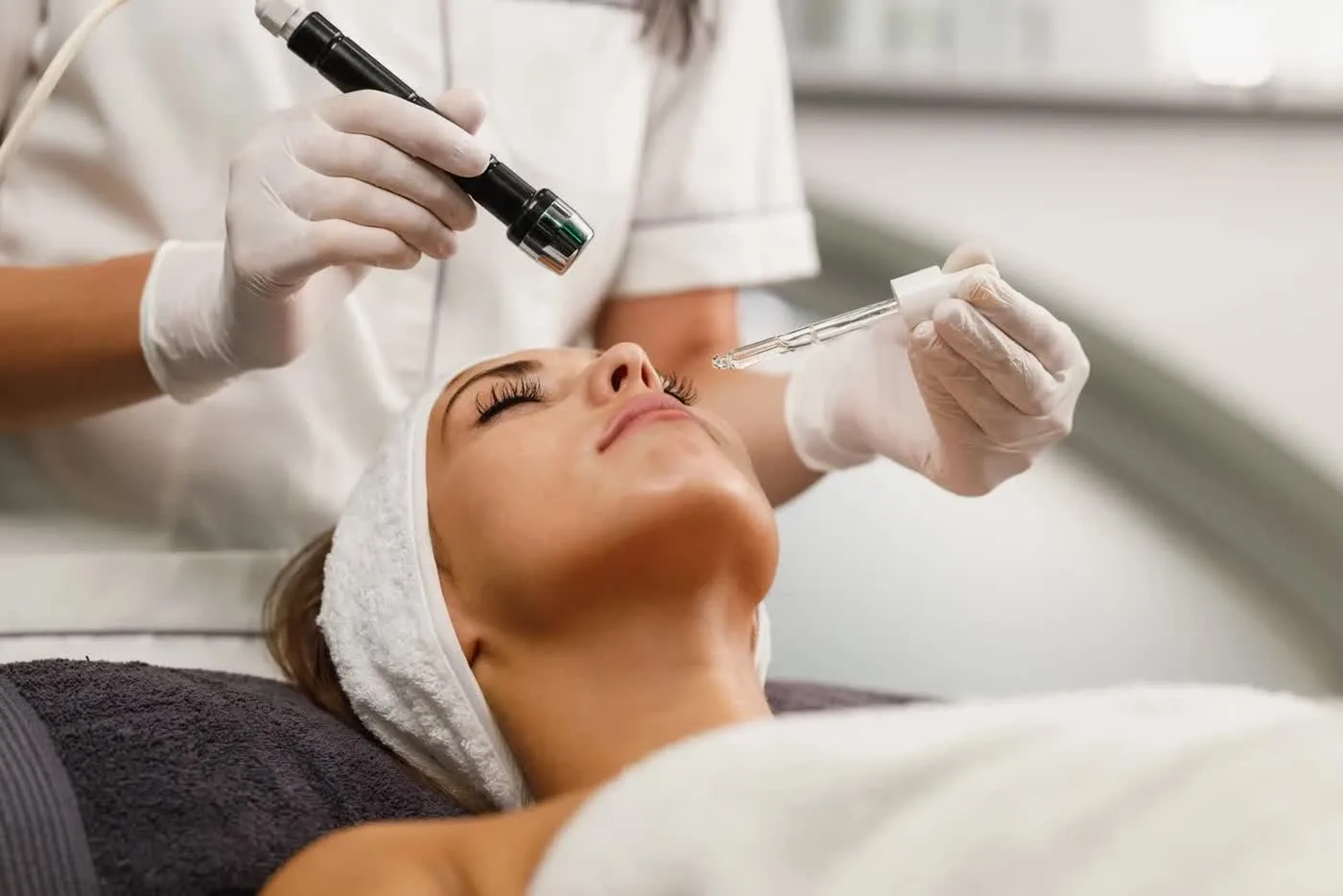
After BioRePeel: your skin may feel slightly tight for an hour or two, and it looks brighter the same day. That's it for most people. You can wear makeup that evening, though many patients skip it just to enjoy the glow. Some notice fine, subtle flaking around day three or four, usually near the chin or the sides of the nose. It's the kind you feel with a fingertip more than see in a mirror. We ask you to keep retinoids and exfoliating acids off your face for a day or two and to be serious about sunscreen, but there is no hiding-at-home phase.
After a ZO 3-Step Peel: day one your skin looks tan and feels tight. Peeling starts around day two or three, and it is real peeling, in sheets around the mouth and cheeks first. It runs three to five days. Picking at it is the single fastest way to sabotage your result, because the skin underneath decides its own schedule. By the end of week one you're through the mess, and over the next week the fresh skin settles into the improvement you paid for.
If you have a wedding, reunion, or photo day on the calendar, that timeline decides for you. BioRePeel the same week is fine. A corrective peel needs at least two weeks of runway, and I prefer three.
Purging, Breakouts, and How to Tell the Difference
This is the fear I see in almost every online thread about peels, and almost no comparison article addresses it.
Purging can happen after either peel, and it isn't a sign something went wrong. Salicylic acid and TCA speed up how fast your skin turns over. If you have congestion sitting under the surface, faster turnover can push it up sooner than it would have arrived on its own. What that looks like: small breakouts in the places you already tend to break out, showing up within the first week or two and clearing on their own.
But a reaction is a different animal. Breakouts or bumps in areas where you never break out, pain rather than the mild tenderness of a pimple, spreading redness, or anything that keeps getting worse past the two-week mark deserves a call to your provider, not patience. The distinction matters because purging resolves and reacting doesn't.
Two things lower the odds of purging in the first place. First, honest intake: if your skin is congested, I'd rather plan for a short series and warn you than promise a single flawless glow session. Second, not treating through an active flare. Running acid over inflamed, broken-out skin is how a purge becomes a mess, which is why we sometimes delay a peel a patient came in wanting. More on that below.
Matching the Peel to Your Skin Concern
BioRePeel vs the ZO 3-Step Peel
How the two peels compare on the decisions that matter.
BioRePeel
ZO 3-Step Peel
Two honest footnotes to that table, because tables flatten nuance.
On melasma: a corrective peel can lighten it, sometimes dramatically. No peel cures it. Melasma is a chronic condition driven by hormones and ultraviolet light, and the pigment machinery that produced it is still there after the peel. Patients who treat the peel as step one and daily sunscreen as step two keep their results. Patients who skip the sunscreen watch the pigment walk back in over a season. I say this in every melasma consult, because I'd rather lose the booking than have you feel misled in six months.
On darker skin tones: BioRePeel's no-peel mechanism is a genuine advantage here, since it's formulated for use across all skin types, including melanin-rich skin that runs a higher risk of post-inflammatory hyperpigmentation. Deeper peels are where caution enters. The deeper a peel acts, the more it can provoke exactly the pigmentation you're treating in skin that tans easily, which is why dermatologic surgery guidance treats peel depth and skin type as a paired decision. If you have deeper skin and a pigment concern, the plan is usually gentler chemistry, more sessions, and more patience, not the strongest peel on the shelf.
How Often Each Peel Makes Sense
Here is where I'll break with what the search results will tell you. Article after article says everyone is switching to BioRePeel. In our own appointment book, the ZO 3-Step, the peel with actual downtime, gets booked more often. Not because BioRePeel underperforms, but because the patients who come to us for a peel usually arrive with a correction in mind, not just a glow, and the deeper peel is the honest match for that goal.
The cadence question splits the same way. BioRePeel is built to repeat: it works as a monthly treatment, and for congested skin we sometimes start with a short series of closely spaced sessions before settling into maintenance. A corrective peel is occasional by design. Once or twice a year is plenty for most faces, timed for cooler months when the sun is easier to avoid.
The pattern I like best, and the one our returning peel patients tend to land on, is rotation: light peels for upkeep through the year, one corrective peel when there's real work to do. Peels also rarely travel alone here. Most of the patients who book peels with us pair them with their Botox or Dysport appointments, treating skin surface and expression lines as two halves of one plan rather than competing purchases.
Who Should Skip Both, and What We Suggest Instead
A good chunk of my peel consults end without a peel on the schedule. These are the situations where we press pause:
- Pregnancy or breastfeeding. We don't perform BioRePeel or corrective peels during pregnancy. This is a talk-to-your-OB situation, and we'll happily map out a plan for after.
- An active cold sore. Acid over an outbreak spreads it. Antivirals first, peel later.
- Isotretinoin (Accutane) in your recent history. Skin on or recently off isotretinoin heals unpredictably, and peels wait until your prescribing doctor clears you.
- An angry, active breakout. Counterintuitive, since peels help acne. But peeling through open, inflamed lesions trades a short-term win for irritation and pigment marks. We calm the flare first, then peel to deal with what it left behind.
- The wrong problem. Peels resurface. They do not lift, fill, or rebuild. If the concern is deep smile lines, hollow cheeks, or skin laxity, a peel will disappoint you, and the honest recommendation is a different conversation, whether that's microneedling, injectables, or nothing at all yet.
None of these are forever. They're sequencing.
Why Where You Get Your Peel Matters
One more thing the trend cycle created: BioRePeel vials sold online to anyone with a credit card, and a wave of "biorepeel at home" searches to go with them.
Please don't. TCA at 35% is a professional concentration. In a treatment room, it arrives with an intake review, correct timing, proper neutralization and removal, and someone trained to recognize the difference between expected tingling and a problem developing. On a bathroom counter, none of that exists, and the FDA has warned consumers directly against using chemical peel products without professional supervision after at-home products caused serious injuries. The chemical-burn horror stories that go viral every year almost always trace back to the same two ingredients: a strong acid and an untrained application. A burn can leave exactly the scarring and pigmentation you were trying to treat, and that kind of damage can be permanent.
The same logic applies to choosing a provider. Ask who is performing the peel, what product they're using, and what their plan is if your skin reacts. Any provider worth your face will have quick answers to all three.
Questions From the Peel Chair
If you're weighing a peel and don't know which kind your skin needs, that's a ten-minute conversation in person. We'll look at your skin, your history, and your calendar, and tell you straight whether the answer is BioRePeel, a corrective peel, a rotation of both, or a different treatment entirely. You can read more about BioRePeel and the ZO 3-Step Peel before you come in.
This article is for educational purposes and reflects our clinical experience at Call of Beauty Med Spa in Encinitas, CA. It is not individual medical advice, individual results vary, and you should consult a licensed provider about your own skin and health history before treatment.

Not sure which peel fits your skin?
Book a consultation and our RN team will match the peel to your skin concern, your skin tone, and your schedule, or tell you honestly if a peel isn't the right tool.
Keep reading
More honest, RN-written guides on skin treatments and protecting your results.
Microneedling With Exosomes: How It Works and Who It Helps
A clear, honest explanation of microneedling with exosomes from an Encinitas med spa team — what exosomes are, how the treatment works, how it compares to PRP, and who it helps.
Read article6 min read
How to Protect Your Skin This Summer
A simple, dermatology-backed routine to protect your skin this summer: the right SPF, how to apply it, and the shade and clothing habits that matter most.
Read article6 min read
Sources
- U.S. Food & Drug Administration. FDA Warns Against Purchasing or Using Chemical Peel Skin Products Without Professional Supervision.
- American Academy of Dermatology. Chemical Peels: Overview.
- American Academy of Dermatology. Melasma: Overview.
- American Society for Dermatologic Surgery. Chemical Peel Guide.
- ZO Skin Health. 3-Step Peel Professional Information.