




Quick Answer
How much does it cost to dissolve filler?
A few hundred dollars for most people. RealSelf's member-reported average for hyaluronidase is about $335, with most prices between $80 and $500, and the spread comes down to one thing: how many vials of enzyme your case takes. Clinics charge per vial, not per appointment. Lips usually take one to two vials; a pair of cheeks, two to three.
Hylenex at our Encinitas studio runs $349/vial, and you get the vial estimate before anything is drawn up. For how the appointment itself goes, see our filler dissolve page.
Someone sits down in my chair, points at their lips, and asks what it will cost to dissolve what's in there. It's a fair question and it's the first thing almost everyone asks. The honest answer is that I can give them the per-vial price in one sentence, and I can't give them the total. Not until I've looked at the area in good light and put my hands on it.
That gap frustrates people, so here's the long version: why every cost guide hands you a range, what the enzyme is doing, how I decide between one vial and two, what the first two weeks look like, and the one piece of medical history that means I won't do it at all.
Why Every Cost Guide Gives You a Range
Dissolving isn't priced like a facial. There's no flat fee for the appointment, because the thing being sold is the enzyme itself, measured in vials. Your cost is the number of vials your case takes, multiplied by whatever a vial costs wherever you go. That's why RealSelf's member-reported pricing lands on an average around $335 with most people somewhere between $80 and $500, and why the clinic blogs that rank for this question quote anything from a couple of hundred dollars to over a thousand. They're all describing the same arithmetic with different vial counts plugged in.
So the question worth asking isn't "how much does it cost to dissolve filler." It's "how many vials will my face take," and that's a clinical question with a real answer.
Here's the version of that math I give people in the chair. One vial for a straightforward lip correction. Two if the product has migrated or there's a lot of it. Two to three for a pair of cheeks, because each cheek tends to take its own vial. Multiply by the per-vial price and you have your range before you've booked anything. Any clinic you call should be able to give you their per-vial number in one sentence; ours is in the box at the top of this page.
The vial estimate isn't a guess, either. Over the past year our Encinitas studio used more than 40 vials of hyaluronidase across roughly 30 dissolve appointments. Most single-area corrections, one set of lips, one cheek, one under-eye, took a single vial. The cases that ran higher were the ones with more product, older product, or product that had moved.
What Hyaluronidase Is Doing In There
Hyaluronic acid filler is a gel of long HA chains linked together. Hyaluronidase is an enzyme that cuts those chains into short fragments, and once they're short enough your body clears them the way it clears its own HA. The enzyme starts working on contact. What you see over the following days is your body carrying off the pieces.
One thing worth knowing, because almost nobody says it out loud: this is off-label use. Hylenex, the recombinant hyaluronidase most US clinics use, is FDA-approved as an agent that helps other injected fluids and drugs disperse and absorb. Dissolving cosmetic filler with it is a well established, heavily documented use that sits outside that approved indication. Off-label isn't a warning sign on its own, and most of aesthetic injecting lives there. You should just know that's what you're consenting to.
Why I'd Rather Quote You Two Vials Than One
When I assess someone for a dissolve, I'm looking for three things. Has the product migrated out of where it was placed. Is it sitting in the wrong plane, too superficial or in a spot it was never meant to be. Can I feel it as a distinct lump or ridge rather than soft tissue. A lot of the people in my chair are also there because they're unhappy with work done somewhere else, by a provider they're not going back to.
If what I find suggests this could go either way, I quote two vials rather than one. That's deliberate. People will probably need more than a single vial in those cases, and I'd rather they walk in knowing that than have me tell them one vial will fix it and then ask for money halfway through.
The product someone else used changes the math too. Clinical guidance on hyaluronidase dosing puts roughly 500 units per mL as generally sufficient for biphasic fillers, while the more cross-linked monophasic products can take up to 750 units per mL and may need repeat injections. You usually don't know which one is in your face. That uncertainty is part of why a good estimate has a range in it.
For what it's worth, fewer than one in ten of our dissolve patients booked a second session. I'd treat that number carefully, including from us. It's a rebooking rate, not proof that one round finished the job, and plenty of people don't come back to tell you either way.
The Fillers That Don't Dissolve At All
Hyaluronidase only works on hyaluronic acid. Juvederm, Restylane, RHA, Belotero and their relatives all come out. Nothing else does.
Because the enzyme is specific to hyaluronic acid, it has no effect on the other filler materials the FDA lists. Sculptra, which is poly-L-lactic acid, and Radiesse, which is calcium hydroxylapatite, can't be broken down this way. Neither can permanent options like Bellafill or injected silicone. If you have one of those and you don't like the result, the honest path is waiting it out, and in the case of the permanent products, a surgical conversation. This is the single biggest reason I push people toward understanding what separates biostimulators from filler before they book, not after. Reversibility is a real feature of HA products, and it's worth choosing on purpose.
If you don't know what's in your face, say so at the consult. It changes what's possible, and it changes the price.
The First Two Weeks
Deflation happens fast, and it's strange to watch. The area goes down within a day or two, and it often looks worse before it looks like anything. Swelling and bruising are normal in that window. Nobody should judge their result at 48 hours.
Two honest things about that period.
First, a claim you'll read everywhere is that hyaluronidase also hits your own natural HA but your body replaces it within a day, so there's nothing to worry about. The first half is uncontroversial. The second half is shakier than the internet suggests. A 2026 paper in Aesthetic Surgery Journal notes that native HA turns over continuously but that this baseline turnover is not upregulated to compensate for the acute loss that follows hyaluronidase exposure. In plain terms: your body doesn't speed up to replace what the enzyme took. It carries on at its normal pace.
Second, the sagging question. People ask whether dissolving filler will age them, and the fear is understandable. What I'd say is that if filler has been holding structure in your face for two or three years, taking it out shows you the face underneath, including whatever changed while the filler was doing the work. That isn't the enzyme damaging you. It's the reveal. It's also why I'd rather someone dissolve and then wait, with nothing scheduled, before deciding how they feel about it.
The One Reason I'll Turn You Away
A bee sting allergy with a history of anaphylaxis. That's the one. Those patients can't have Hylenex, and I won't treat them.
The reason is specific: hyaluronidase is an active component of bee venom, which is why the FDA label tells clinicians to use caution in anyone with a reported bee sting allergy, and why known hypersensitivity to hyaluronidase is a flat contraindication. The label also describes a preliminary intradermal skin test for patients where there's doubt. Allergic reactions are rare, reported in under 0.1% of patients receiving hyaluronidase, but rare isn't the same as acceptable when the reaction is anaphylaxis.
We ask about this before anything is drawn up, not after. The reaction we're watching for is itching, swelling, and any sense of the throat tightening. If you have that history, tell your injector before you're in the chair.
Tell your injector before treatment, not after
A bee sting allergy with a history of anaphylaxis rules out hyaluronidase. So does any known hypersensitivity to the enzyme itself. If you've had a severe reaction to a sting, say so at booking, and say it again in the chair. The signs of a reaction to watch for afterward are itching, spreading swelling, and any tightness in the throat. Treat throat tightness as an emergency and call 911.
While we're here: you cannot dissolve filler at home. There's no topical, no supplement, and no natural method that breaks down cross-linked HA. Hyaluronidase is a prescription injectable that belongs in the hands of someone who can manage a reaction to it. The searches for a home version are common enough that I want to answer them plainly.
Who Pays When It's Someone Else's Work
You'll read that any reputable injector dissolves their own work for free. I want to be straight about how we actually handle it, because that claim sets up an expectation that doesn't survive contact with most clinics.
We don't typically dissolve our own work at no charge. If something genuinely needs correcting, that's a different conversation and we'll have it. But if we've been filling someone's lips for two years and they now want that filler gone, or they've changed their mind about the look, that's a treatment. It uses product, it takes chair time, and it carries its own risk. It gets billed like one, by the vial.
Something else our books show: dissolve appointments and filler appointments travel together. Across those roughly 30 dissolve visits in the past year, a comparable number of filler treatments were booked alongside them. Sometimes that's clearing old product to build a better plan on top, which is the same logic behind how a facial balancing plan gets sequenced. Just budget for it as two treatments, because that's what it is.
If you're weighing whether to dissolve something, the useful next step is having someone look at the area, tell you what they think is in there, and give you a vial estimate before you commit. Book a filler dissolve consultation at our Encinitas studio, and bring whatever you know about what was injected and when.
This article is for educational purposes and reflects our clinical approach at Call of Beauty Med Spa in Encinitas, CA. It is not individual medical advice, individual results vary, and you should consult a licensed provider about your own health history before treatment. Practice statistics are aggregate, anonymized figures from our appointment records for the 12 months ending September 2026. National pricing is RealSelf member-reported data and will vary by provider and region.
Keep reading
More RN-written guides on filler planning, structure, and what can and can't be undone.

How Injectors Actually Plan Facial Balancing
An RN injector's guide to facial balancing: how a face gets read before a syringe opens, what balancing can and can't fix, why our data shows 1 in 12 filler appointments is a dissolve, and who should skip it.
Read article10 min readSculptra vs Radiesse vs Filler: What Each One Does to Your Face
An RN injector's guide to Sculptra vs Radiesse vs hyaluronic acid filler: how each one works, which zones suit each, why biostimulators can't be dissolved, and what year two looks like on real patients.
Read article11 min read
Lip Flip vs Lip Filler (and When the Answer Is Dissolve First)
An RN injector's guide to lip flip vs lip filler: what each one changes, what our rebooking data says about how long a flip holds, the straw-and-whistle side effects nobody posts about, and when dissolving old filler has to come first.
Read article9 min read
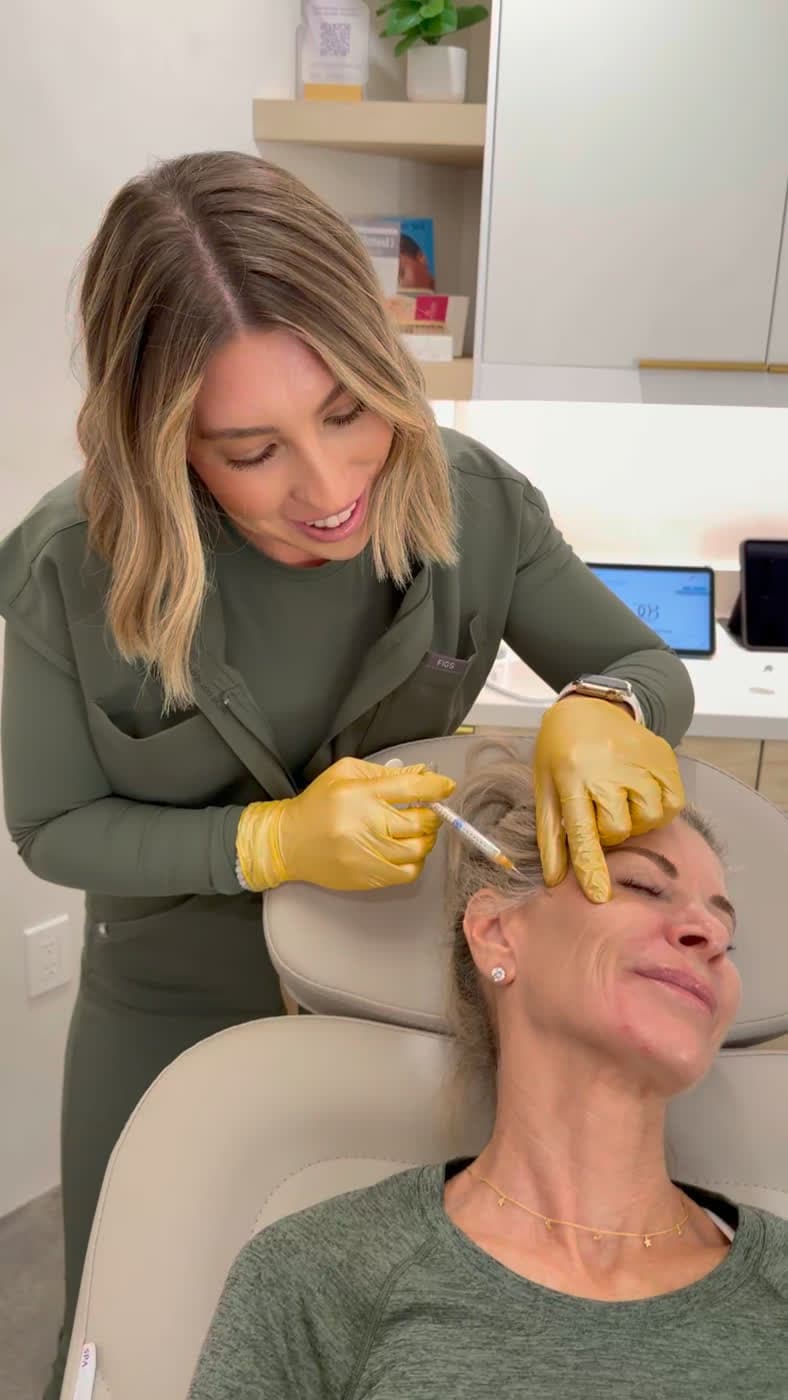
Not sure what's in there or what it would take to remove it?
A filler dissolve consultation at our Encinitas studio takes about 30 minutes. Olga assesses migration, depth, and how much product is present, gives you a vial estimate before anything is drawn up, and says so if waiting is the better call.