




Quick Answer
Is preventative Botox real, and does it work?
Preventative Botox means starting botulinum toxin while your lines still disappear when your face relaxes, so they don't become creases you can see at rest. The evidence is thinner than the marketing: one 13-year identical twin case report and a 2025 systematic review of nine studies that concluded long-term outcomes are not yet established. It can't stop aging, and it does nothing for sun damage or lost volume. The signal to start is a line that lingers after your face goes still, not a birthday.
For the treatment itself: Botox injections at our Encinitas studio.
The long-term evidence for preventative Botox comes down to one study. One. It followed two people.
I'm Olga Brener, the RN injector at Call of Beauty in Encinitas, and neurotoxin is most of my week: more than 1,700 appointments across more than 900 patients in the twelve months ending September 2026. "Should I start now?" is a question I answer several times a day, usually from someone in their late twenties who has been turning it over for a year.
My answer is less confident than the one on most clinic websites, and it depends far more on what your face is doing in the mirror than on how old you are.
Here it is in full, including the parts that talk people out of booking.
What "Preventative" Means When the Line Isn't There Yet
Every expression line goes through two stages, and preventative Botox is a bet on the boundary between them.
A dynamic line appears when the muscle contracts and vanishes when it lets go. Raise your brows, the forehead lines show up. Drop them, the lines go. A static line is one that has stopped leaving. The skin has been folded in the same place so many times that the crease is now printed into the dermis, the way a sheet of paper keeps a fold. Botox relaxes the muscle. It has no effect on a crease that's already etched, which is why deep static lines usually need resurfacing or filler alongside the neurotoxin, not instead of it.
So preventative treatment is the attempt to intervene while the line is still in stage one. Relax the muscle often enough during the years when the fold is forming, and in theory the fold never sets.
You can check which stage you're in without a consult. Sit in front of a mirror in daylight, make your strongest frown or brow-raise, hold it, then let your whole face go completely slack. Give it ten seconds. Whatever is still visible after your face has gone still is a static line. Whatever disappeared is dynamic. Take a photo at rest while you're there, because you'll want the comparison in two years more than you want it today.
That test, not your age, is the useful input.
Is Preventative Botox Real? What the Evidence Can and Can't Say
The honest answer: the concept is plausible, the mechanism is sound, and the clinical evidence is far thinner than the category's confidence.
Nearly every article you'll read on this topic, and every consult you'll sit through, traces back to a single paper. In 2006, a surgeon published a comparison of identical twins in Archives of Facial Plastic Surgery. One twin had been treated in the forehead and between the brows two to three times a year for thirteen years. Her sister had two treatments total. At the end, the regularly treated twin had no visible forehead or frown lines at rest; her sister did. Crow's feet were less noticeable in the treated twin even seven months after her last appointment. Areas nobody had injected, like the nasolabial folds, had aged the same in both.
It's a compelling result. It's also a case report with two participants, no control over the thousand other variables in two separate lives, and no replication in the twenty years since.
The most recent attempt to take stock is a 2025 systematic review in Muscles, which screened 1,327 papers and found nine worth including. Its conclusion is worth quoting rather than paraphrasing: early use may delay the formation of dynamic wrinkles and the development of static lines over time, possibly with a remodeling effect on dermal collagen, but long-term safety and efficacy outcomes are "not yet fully established," and the studies are too heterogeneous in design and protocol to pool.
That is a real finding. It is not "preventative Botox works," and it isn't "preventative Botox is a myth" either. Both of those sentences are more confident than anyone is entitled to be.
What I tell patients: we have good evidence that Botox relaxes muscles and that relaxed muscles fold skin less. We have one striking long-term case and a handful of short studies pointing the same direction. We do not have a trial that followed people who started at 25 against people who started at 40 and photographed both at 55. Anyone who tells you otherwise is selling.
When to Start: Lines, Not Birthdays
The most-searched version of this question is "what age should I start preventative Botox." It's the wrong question, and the answer people give it (mid-20s, usually) is a marketing convention rather than a clinical one.
The FDA's prescribing information for Botox Cosmetic indicates it for adults, and the trials that supported approval enrolled patients from 18 to 77. There's no lower bound past adulthood and no recommended starting age, because there isn't a birthday at which faces uniformly begin to crease. I've seen 35-year-olds with nothing at rest and 26-year-olds with a set line between the brows from a decade of squinting at screens in San Diego sun.
Reddit, for what it's worth, has largely worked this out on its own. The highest-voted answer in that long-term thread was some version of "start once the lines start showing up; you don't need to start before that point." That matches how I practice.
What predicts whether early treatment helps you:
- Muscle strength. A heavy frowner folds skin harder and sets creases sooner.
- Skin quality. Sun damage and thin, dehydrated skin crease faster and hold the crease longer. If you're in the sun on the 101 every weekend, this is the lever that matters more than injections.
- What's already visible at rest. The mirror test above.
- Family pattern. Not destiny, but useful information about which lines you're likely to set first.
Age correlates with all four, which is why the age question feels reasonable. It just isn't the thing being measured.
How First-Time Patients Are Actually Dosed
Here's where the internet's version of preventative Botox and my appointment book stop agreeing.
Search "preventative Botox" and you'll be told it uses small doses, typically 15 to 25 units across the upper face, sometimes marketed as "baby Botox." That number is repeated on nearly every page ranking for the term. It doesn't describe what most first-time patients receive.
Across our Botox patients in Encinitas since early 2024, the typical first appointment is in the mid-30s of units, and fewer than one in five first-timers start at 25 units or under. Among patients whose first visit was in the twelve months to July 2026, the median was 39 units.
The gap isn't a clinic upselling people. It's what happens when a real face meets a real dose. The FDA-approved dose for the frown lines alone is 20 units, with 24 units for crow's feet and 40 units for forehead and frown lines together. A "preventative" 20 units spread across forehead, glabella, and crow's feet is below the studied dose in all three areas at once. It can still soften things. It often produces a result that fades early and reads as "I don't think it worked."
There's a related pattern in our numbers: about half of the patients who do start low go up in units at their second appointment. That's not a sales funnel, it's a conversation. They came back and said the outside of the brow still moved more than they wanted, or that it wore off by week nine.
None of which means low-dose treatment is wrong. It's genuinely the right call for a first-timer who is nervous, for someone with a mobile forehead who needs to keep expression for work, or when we're deliberately treating one small area. But "preventative dose" should describe a clinical decision about your muscles, not a tier on a menu.
Will It Age You? Atrophy, Frozen Faces, and What Happens If You Stop
This is the fear underneath the whole topic, and it deserves a straight answer rather than reassurance.
There's a Reddit thread asking what preventative Botox looks like after ten or fifteen years. It has 148 comments and no answer, because nobody has one yet. "I cannot find any pictures online," the person wrote, and she was right: the practice is new enough that the first generation to start in their twenties hasn't reached fifty. That gap is where the fear grows, and it takes three forms.
"The muscle will waste away." This one has real science behind it, and the literature disagrees with itself. A 2016 review in Aesthetic Surgery Journal concluded that botulinum-induced muscle atrophy is "both reversible and temporary." A 2022 systematic review in Toxins, covering 30 studies, found measurable atrophy that doesn't always fully reverse: masseter muscle volume down about 31 percent at three months and still down 13 percent at a year. Two things are worth knowing about those numbers. They come mostly from therapeutic and off-label jaw-slimming (masseter) doses, which are many times larger than what goes into a forehead. And the same review found that repeated injection cycles did not stack the effect proportionally, meaning most of the change happens early rather than compounding year over year.
So: measurable, dose-dependent, largely but perhaps not entirely reversible, and studied at doses well above cosmetic ones. Some thinning of a heavily treated muscle over many years is plausible. In the upper face, at cosmetic doses, a mild loss of bulk in the frown muscles is arguably the point.
"I'll look frozen." This is a dosing and placement outcome, not a property of the drug. The version people picture, an immobile shelf of forehead, comes from treating the frontalis heavily without regard for how much brow lift someone needs. If you can't raise your brows at all, you were over-treated. Tell your injector, and go lighter next round rather than switching brands.
"If I stop, I'll look worse than if I'd never started." No evidence supports a rebound, and one piece of evidence points the other way: in the twin study, the treated sister's crow's feet still looked better than her sister's seven months after treatment ended, well past the point where the drug was gone. When Botox wears off, the muscle returns to its prior strength and lines return to where they were headed. You lose the benefit. You don't inherit a deficit.
I hear the practical version of this constantly, usually as some form of "I did Botox in my 20s, stopped for five years, and now my forehead is worse." That's five years of continued expression, sun, and collagen loss doing what they were always going to do. It reads as punishment for stopping. It's just the underlying trajectory, visible again.
The related idea circulating on Reddit is to let treatment wear off completely between rounds so the muscles "restrengthen." There's no evidence that's necessary, and it has a real cost: letting the muscle come fully back for weeks means folding the skin at full strength during that window, which is the thing you were trying to avoid. The label's guidance that dosing has not been evaluated more often than every three months sets the floor. There's no ceiling that requires a full washout.
How Often You'll Really Be Back
Preventative Botox is a subscription, and the interval matters more than most consults admit.
The label puts duration for frown lines at roughly three to four months, and clinics tend to quote twelve weeks. Our own books say patients settle a bit longer: among patients who return, the typical gap between neurotoxin appointments is about 14 weeks, and first-time patients tend to come back around four months after their first visit. Over a year, that's closer to three appointments than four.
The number I found more interesting is that starting dose barely predicts whether someone continues. Looking at Botox patients whose first visit gave them a full year of follow-up, roughly 6 in 10 came back within twelve months whether they started at 25 units or under, in the 26 to 45 range, or above 45. The differences between those groups were smaller than I expected, and small enough that I won't claim a pattern.
That's worth saying plainly because both sales pitches in this category are wrong. "Start small so you'll never need more" isn't supported by our data, since half of low-dose starters increase at visit two. And "low doses are a waste of money" isn't either, since those patients return at about the same rate as everyone else. Starting dose is a comfort and clinical decision. It doesn't appear to determine your long-term relationship with the treatment.
What that means for planning: if you're deciding whether to start at 27, you're not deciding about one appointment. You're deciding whether you want roughly three appointments a year, indefinitely, in exchange for a fold that may set later than it otherwise would. That's a reasonable trade for plenty of people. It should be made with the real number in view.
Who I Talk Out of Preventative Botox
Not everyone who asks for this should get it, and these are the conversations I have most weeks.
Nothing at rest, and nothing much when you move. If your face is slack in the mirror after ten seconds and your strongest frown barely creases, there is no fold in progress to interrupt. Come back when there is. This is the most common no I give.
The reason is a video, not a mirror. When someone can't point to a line they're bothered by but can name the app that made them think about it, we talk instead. That isn't judgment; a 25-year-old comparing herself to a filtered face is comparing herself to something that doesn't exist.
You want zero movement. Patients who describe the goal as "completely frozen" tend to be unhappy at every dose, because the target is an appearance rather than a line. That's a longer conversation before any injection.
You know you'll stop within a year. A single round before a wedding is fine and common. But an every-few-months commitment started and abandoned buys you a few months of smoothness and nothing structural.
Sunscreen and a retinoid aren't in place yet. If you're not protecting your skin daily, Botox is the expensive way to address a problem you're actively creating. The American Academy of Dermatology's overview is clear that neurotoxin treats expression lines, not skin quality, and skin quality is a large part of how deep a crease gets and how long it stays. Get the basics running first. We wrote a practical version of that for coastal North County in our summer skin protection guide.
Preventative Botox Questions From the Chair
The questions that come up in nearly every consult with a first-time patient, answered the way I answer them in person.
If you're weighing whether it's time, the useful next step is having someone look at your face at rest and in motion and tell you which lines are still dynamic, which have set, and whether the honest answer is to wait. Book a Botox consultation at our Encinitas studio. If you'd rather read first, our neurotoxin comparison covers how Botox, Dysport, and Jeuveau differ once you've decided to start.
This article is for educational purposes and reflects our clinical approach at Call of Beauty Med Spa in Encinitas, CA. It is not individual medical advice, individual results vary, and you should consult a licensed provider about your own health history before treatment. Practice statistics are aggregate, anonymized figures from our appointment records for the periods stated.
Keep reading
More RN-written guides on neurotoxin dosing, brands, and honest treatment planning.
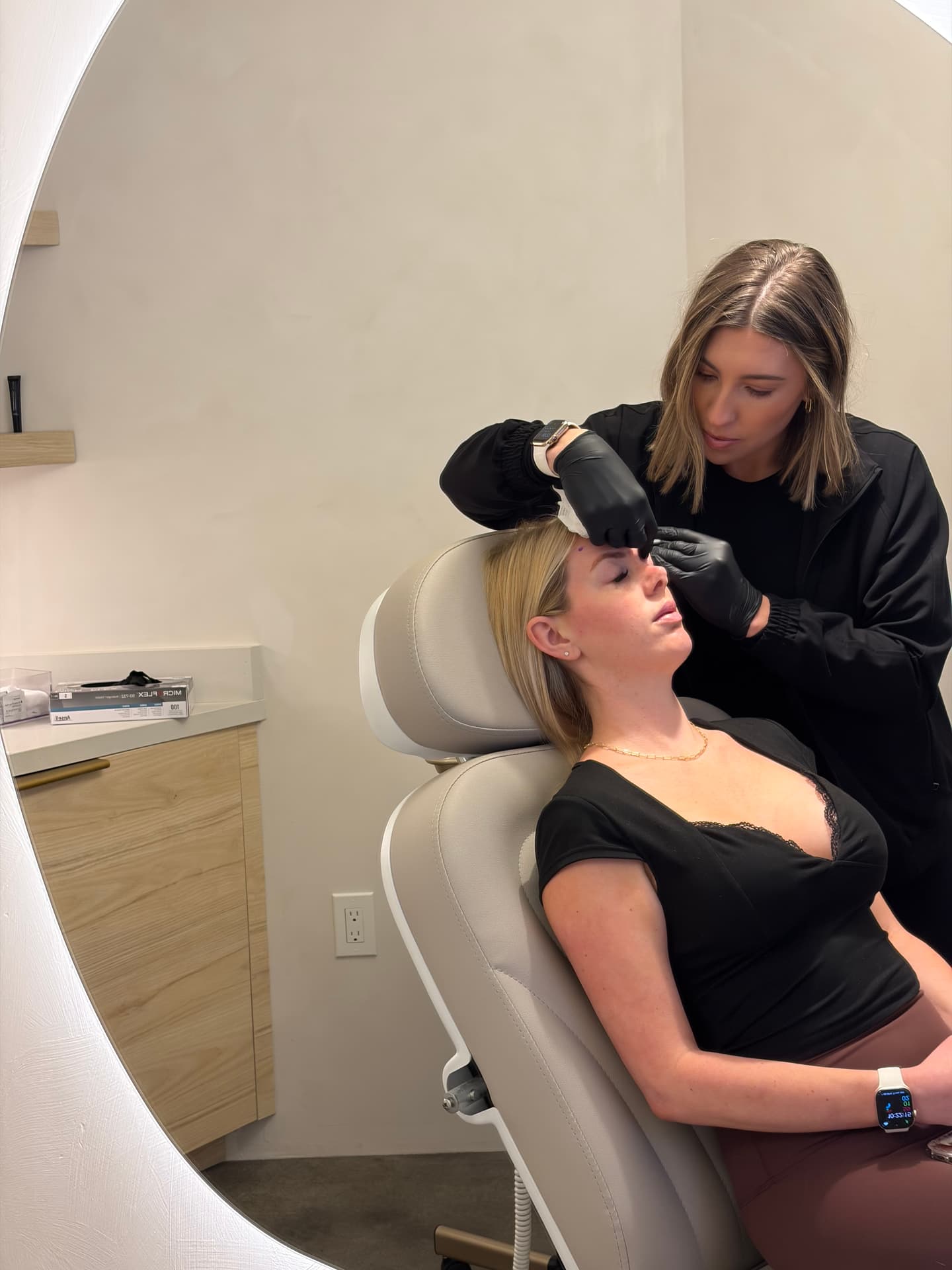
Botox vs Dysport vs Jeuveau: What Our Dosing Data Shows
An RN injector's look at how Botox, Dysport, and Jeuveau actually differ, why unit counts don't compare across brands, and what more than 3,200 neurotoxin visits reveal about which one patients stay with.
Read article8 min read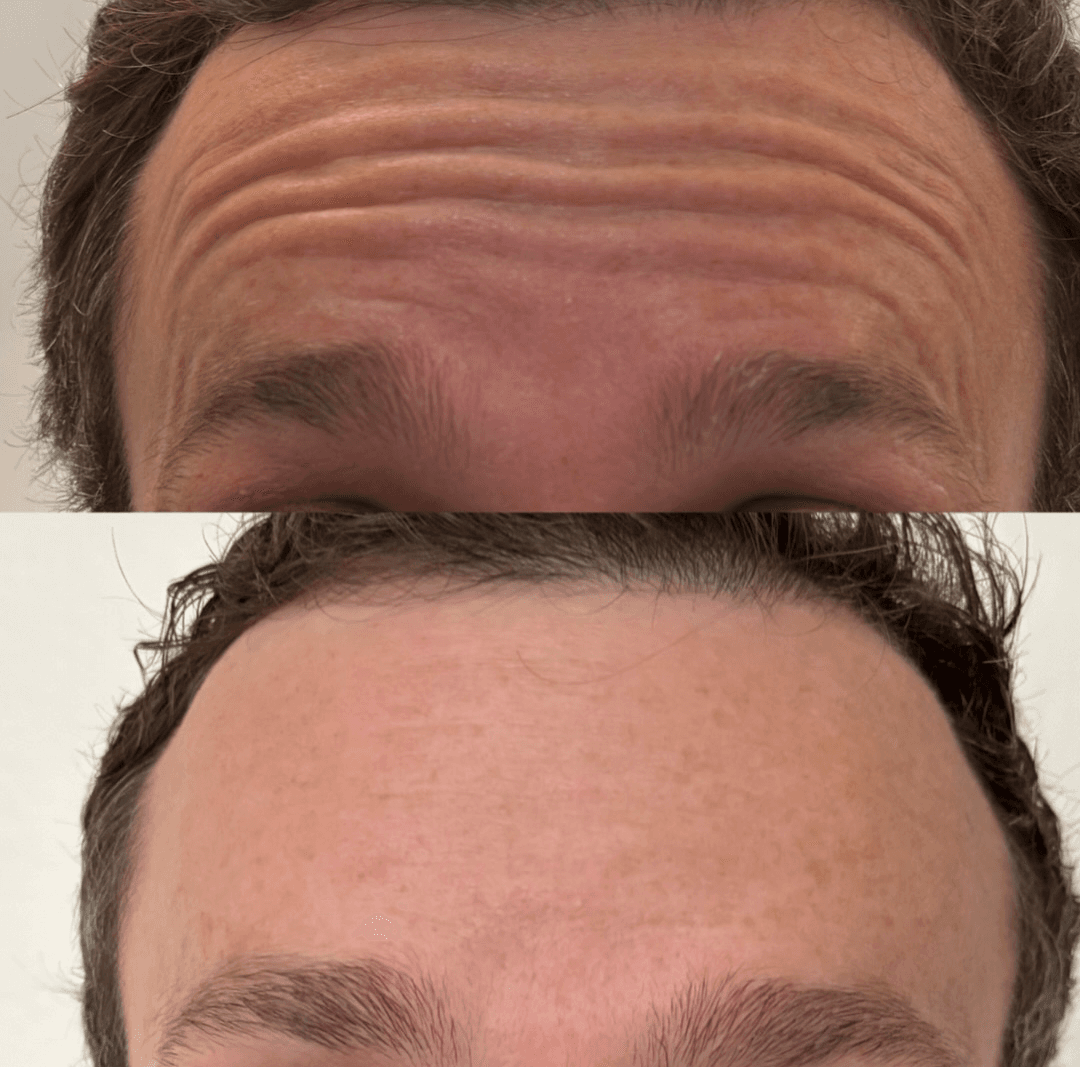
Botox for Men: How Dosing and Goals Differ
An honest, RN-written guide to Botox for men (Brotox) from an Encinitas injector: why men usually need more units, how the brow and forehead plan changes, how to avoid a frozen look, and who it helps.
Read article9 min read
Not sure whether it's time to start?
A Botox consultation at our Encinitas studio takes about 30 minutes. Olga looks at your face at rest and in motion, tells you which lines have set and which haven't, and says so if the right answer is to wait.